In the realm of industrial recycling, motor stator recycling machines have emerged as a crucial innovation. As a supplier of these machines, I’ve witnessed firsthand the growing interest in their potential. This blog aims to explore whether motor stator recycling machines offer a good return on investment (ROI). Motor Stator Recycling Machines
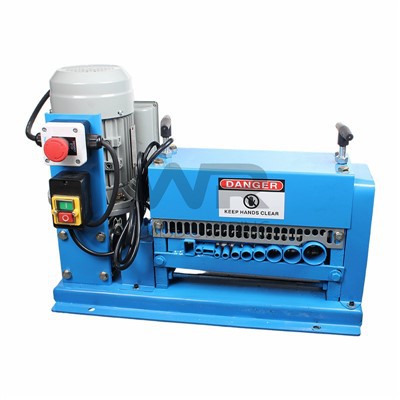
Understanding Motor Stator Recycling
Before delving into the ROI, it’s essential to understand what motor stator recycling entails. A motor stator is a stationary part of an electric motor that contains copper windings and a laminated iron core. Recycling these components not only helps in conserving natural resources but also reduces the environmental impact associated with mining and manufacturing new materials.
The process of recycling motor stators involves several steps. First, the stator is fed into the recycling machine, which uses mechanical methods to separate the copper windings from the iron core. The separated copper can then be sold as scrap metal, while the iron core can also be recycled or reused in various industries.
Factors Affecting ROI
Initial Investment
One of the primary considerations when evaluating the ROI of motor stator recycling machines is the initial investment. These machines can vary in price depending on their size, capacity, and features. A small – scale machine suitable for a startup operation might cost a few thousand dollars, while larger, more advanced models can cost upwards of tens of thousands of dollars. Additionally, there are costs associated with installation, training, and any necessary infrastructure upgrades.
Operating Costs
Operating costs include electricity, maintenance, and labor. Motor stator recycling machines typically require a significant amount of electricity to operate, especially those with high – speed separation mechanisms. Regular maintenance is also crucial to ensure the machine’s longevity and efficiency. This includes replacing worn – out parts, lubricating moving components, and conducting periodic inspections. Labor costs depend on the level of automation of the machine. A fully automated machine may require less manual labor, while a semi – automated or manual machine may need more workers to operate.
Revenue Generation
The main source of revenue from motor stator recycling is the sale of recycled copper and iron. The price of these metals fluctuates in the market, which can have a significant impact on the overall revenue. The quantity of metal recovered also depends on the type and size of the stators being recycled. Larger stators generally contain more copper and iron, resulting in higher revenue. Additionally, some recycling facilities may be able to charge a fee for accepting motor stators from customers, further increasing their income.
Case Studies: Real – World Examples
To better understand the ROI of motor stator recycling machines, let’s look at a few case studies.
Small – Scale Recycling Operation
A small – scale recycling business purchased a basic motor stator recycling machine for $5,000. The machine had a relatively low capacity and required some manual labor to operate. The operating costs, including electricity, maintenance, and labor, were approximately $1,000 per month.
The business was able to collect and recycle about 50 motor stators per month. On average, each stator yielded about 2 kilograms of copper and 5 kilograms of iron. At the current market prices of $5 per kilogram for copper and $0.5 per kilogram for iron, the monthly revenue from selling the recycled metals was approximately $550. However, the business also charged a small fee of $10 per stator for accepting the waste, which added an additional $500 in monthly revenue.
After a year of operation, the total revenue was $12,600, while the total costs (including the initial investment) were $17,000. Although the business did not achieve a positive ROI in the first year, with the expected increase in the number of stators recycled and the potential for higher metal prices in the future, the long – term outlook was promising.
Large – Scale Recycling Facility
A large – scale recycling facility invested $50,000 in a high – capacity, fully automated motor stator recycling machine. The operating costs, including electricity, maintenance, and a small team of technicians, were around $5,000 per month.
The facility was able to process about 500 motor stators per month. Each stator produced an average of 3 kilograms of copper and 6 kilograms of iron. At the market prices, the monthly revenue from selling the recycled metals was approximately $6,300. The facility also charged a fee of $20 per stator for acceptance, adding another $10,000 in monthly revenue.
After the first year, the total revenue was $195,600, while the total costs (including the initial investment) were $110,000. This resulted in a significant positive ROI, demonstrating the potential profitability of large – scale motor stator recycling operations.
Long – Term Benefits
Beyond the direct financial returns, motor stator recycling machines offer several long – term benefits that contribute to their overall value.
Environmental Sustainability
By recycling motor stators, we reduce the need for new mining and manufacturing processes, which are often energy – intensive and have a significant environmental impact. This helps in conserving natural resources and reducing greenhouse gas emissions. As more companies and consumers become environmentally conscious, there is a growing demand for sustainable recycling solutions, which can enhance the reputation of recycling businesses.
Market Trends
The demand for recycled metals is expected to increase in the coming years. As the global population grows and the demand for electrical equipment rises, the supply of used motor stators is also likely to increase. This presents an opportunity for recycling businesses to expand their operations and increase their revenue. Additionally, government regulations and incentives for recycling are becoming more common, which can further support the growth of the motor stator recycling industry.
Conclusion

In conclusion, motor stator recycling machines can offer a good return on investment, especially for large – scale operations. While the initial investment and operating costs can be significant, the potential revenue from selling recycled metals and accepting waste can outweigh these costs in the long run. Moreover, the long – term benefits of environmental sustainability and favorable market trends make motor stator recycling an attractive business opportunity.
Single Shaft Shredders If you’re considering entering the motor stator recycling industry or looking to upgrade your existing recycling equipment, I encourage you to reach out to discuss your specific needs. Our team of experts can provide you with detailed information about our motor stator recycling machines, including their features, performance, and pricing. We’re committed to helping you make an informed decision and achieve a successful and profitable recycling operation.
References
- "Recycling of Electric Motors: A Review of Technologies and Processes." Journal of Environmental Management.
- "Market Trends in the Recycling Industry." Recycling World Magazine.
- "Economic Analysis of Metal Recycling Operations." International Journal of Industrial Economics.
Xi’an Wisdom Ring Machinery Co., Ltd.
As one of the leading motor stator recycling machines manufacturers and suppliers in China, we warmly welcome you to buy advanced motor stator recycling machines for sale here from our factory. All customized machines are with high quality and competitive price. Contact us for quotation.
Address:
E-mail: copperrecycling@wisdomringmachinery.com
WebSite: https://www.wisdomringmachinery.com/
