Hey there! If you’re here digging into mud pump prices, chances are you’re either knee-deep in oil drilling, well servicing, or maybe even water well projects—and you’re not here to mess around with generic, vague numbers that don’t mean jack. As a mud pump supplier who’s been in this game for over a decade, I’ve fielded more “how much does a mud pump cost?” questions than I can count. Half the time, people ask that first without telling me what they actually need, and that’s the #1 mistake I see buyers make. So let’s cut the crap, break down the real price ranges, why they jump like they do, and what you should actually be paying (or avoiding) when you shop for one. Mud Pump

First off, let’s get one thing straight: a mud pump isn’t just a pump. It’s the workhorse that circulates drilling mud (water, clay, chemicals, whatever) through your drill string—cleans the bit, carries cuttings up, keeps the hole stable, and cools everything down. So the price doesn’t just depend on how much pressure it puts out. It’s tied to use case, size, build quality, power source, and whether it’s new, used, or remanufactured. No single number works here, but I’ll lay out the tiers we see every day, from the tiny jobs to the big leagues.
Let’s start with the entry-level stuff, which is mostly for small-scale projects or hobbyists. Think water well drills under 1,000 feet, geothermal loops, or even small construction holes. These are usually triplex mud pumps with smaller power ratings—like 5 hp to 20 hp, pressure around 500 to 1,000 psi. What do these go for? New entry-level models are anywhere from $1,200 to $5,000. Wait, why such a big gap? Because some are made with basic cast iron parts, no fancy controls, and they’re designed for occasional use (like a week-long well job). Others have better seals, a slightly more reliable motor, and can handle a bit more grit, so they’re on the higher end of that. Now, used entry-level? You can snag those for $500 to $1,500, but here’s the catch: most of these pumps are beat up. The seals might leak, the liners could be worn out, and if the previous owner ran it 10 hours a day instead of 10, that’s a ticking time bomb. I’ve seen guys save $700 on a used one only to drop $300 on repairs a week later, so if you go used here, make sure you do a full pressure test before you buy.
Next up is the mid-range, which is where most of our regular clients live—small to mid-sized drilling companies, well service crews, and contractors doing 5,000 to 15,000 foot wells. These pumps are the workhorses, usually 20 hp to 100 hp, pressure from 1,000 to 3,000 psi. The price range here is $5,000 to $25,000 for new models. Let’s break that down. The lower end of mid-range is for light, intermittent use—stuff like residential well jobs, small horizontal directional drills (HDD) for fiber lines. These have steel liners, standard electric motors or small diesel engines, and basic pressure gauges. The higher end is for guys running 8-hour days, 5 days a week. They have hardened alloy liners that last longer, variable speed controls so you don’t blast mud at full pressure for every job, better seal systems that cut down on downtime, and even safety features like over-pressure shut-offs that prevent costly breakdowns. Remanufactured mid-range pumps are a sweet spot here, by the way—we do these all the time. A reman unit, which we tear down, replace all worn parts (liners, pistons, seals), and test to factory specs, goes for $2,500 to $12,000. Way cheaper than new, and almost as reliable, as long as you go with a supplier that actually does the full teardown and test (not just slap a new paint job on a beat-up pump and call it reman).
Now the big boys—heavy-duty, industrial-grade mud pumps for oil and gas drilling, deep water wells, large HDD projects, or mining. These are triplex or even duplex pumps, 100 hp all the way up to 1,500 hp, pressure from 3,000 to 7,500 psi. If you guessed the price range is steep, you’re right. New heavy-duty mud pumps start at $25,000 and can go all the way up to $250,000 or more. Wait, why the massive gap here? It’s all about specs and customizations. A basic 100 hp unit for oil well work might be around $30k, but add a remote monitoring system that tracks pressure, flow, and temperature 24/7, a diesel engine with Tier 4 emissions (required in many states now), and custom plumbing for high-capacity mud, and you’re pushing $100k easy. The ultra-high-end ones for extreme deep drilling? They’re built to run 24/7 for months on end, with forged steel parts, precision-machined components, and every safety feature you can think of. We’ve sold units in the $150k range for offshore service crews, and those things are tanks—we haven’t had a major breakdown on one in 3 years of use for that client. Used heavy-duty pumps? They’re not as common, but if you find a good one (from a company that maintained it religiously, not a rig that ran it until it died), you’re looking at $10,000 to $100,000, but again, inspections are non-negotiable here.
Now, let’s talk about the stuff that bumps the price up that no one tells you about, because that’s the stuff that gets buyers into trouble. First, liners and pistons. Those are the wear parts, right? For a mid-range pump, you might spend $200 to $800 a set. For the heavy-duty ones? $1,500 to $5,000. If you skimp on liners and use cheap ones, they’ll wear out in a week instead of a month, so you’ll actually spend more in the long run. Then there’s power source. Electric motor pumps are cheaper to run, but if you don’t have power at your job site, you need a diesel unit, which adds $2,000 to $10,000 depending on the horsepower. Also, parts availability. Some cheap, no-name pumps from overseas have parts that take 6 weeks to get, and when you do get them, they’re not even the right fit. A reputable brand pump, like the ones we sell, has parts on the shelf in most regions, so downtime is hours, not weeks. Oh, and warranty. New pumps from good suppliers have at least a 1-year parts and labor warranty. Some cheap no-name pumps come with 90 days, or no warranty at all. If a pump costs $1k less but has no warranty, that’s not a deal—that’s a risk.
Wait, what about specialized mud pumps? Like for high-viscosity mud (common in geothermal or oil mud that has a lot of bentonite) or for corrosive mud (like drilling through salt formations)? Those can cost 20% to 50% more than the standard price ranges I mentioned earlier. Because the parts are coated in corrosion-resistant material, or the fluid ends are built to handle thick, gritty mud without wearing out fast. That’s not a random markup—it’s a necessity if you’re working with those mud types.
I get it, price is a big deal. But here’s the thing: buying the cheapest mud pump you can find almost always ends up costing you more. I’ve had clients come to us after buying a cheap pump online for $1,000, only to have it break 3 days into a job, costing them $5,000 in lost drilling time. That’s way worse than paying $3,000 for a reliable entry-level pump that’ll last years. The sweet spot for most people is the mid-range new or remanufactured, as long as you go with a reputable supplier that stands behind their work.
Now, let’s wrap this up. To recap the real price ranges:
- Small, entry-level (residential wells, small construction): $1,200 – $5,000 new, $500 – $1,500 used
- Mid-range (small to commercial drilling, well service): $5,000 – $25,000 new, $2,500 – $12,000 remanufactured
- Heavy-duty (industrial, oil/gas, deep drilling): $25,000 – $250,000+ new, $10,000 – $100,000+ used
But remember, those are just ballparks. The actual price depends on your specific needs: how deep you’re drilling, what mud you’re using, power access, whether you need extra features, and whether you buy new, reman, or used.
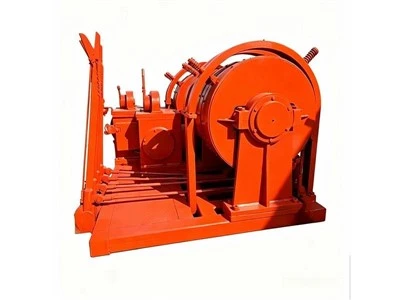
If you’re not sure which one fits your project, don’t guess. We’ve helped hundreds of guys figure out exactly what they need without overpaying. Whether you’re a one-man well service crew or a big drilling company with a fleet, we can walk you through specs, compare options, and make sure you get a pump that works for your budget and your jobs. Hit us up to chat through your project, no pressure, no salesy nonsense—just straight talk about mud pumps and what you actually need.
Mud Pump References:
- Oilfield Glossary. Mud Pump Price Range and Operating Specifications. Oilfield Glossary, 2023.
- National Drilling Association. Drilling Equipment Cost Benchmark Report. National Drilling Association, 2024.
- Global Industrial Pump Manufacturers Association. Heavy-Duty Mud Pump Price and Performance Analysis. Global Industrial Pump Manufacturers Association, 2023.
Hebei Zhongxin Machinery Equipment Co., Ltd.
As one of the most experienced mud pump manufacturers in China, we also support customized service. We warmly welcome you to buy high quality mud pump for sale here from our factory. If you have any enquiry about pricelist, please feel free to email us.
Address: Wangxizhang Industrial Zone, Zhao County, Shijiazhuang City, Hebei Province, China
E-mail: zxnjbzg@163.com
WebSite: https://www.hbzxdrilling.com/
