If you’re reading this, chances are you just got a flat hose from my company, or maybe you’re staring at a dusty one in your garage that’s never worked right because you tried to wing the install. Trust me, I’ve seen it all. Last month, a small landscaping guy came to me panicking because he’d hooked his new flat hose up to a pump and it kinked so bad it blew a connection. Turns out he didn’t prime the line first—rookie mistake, but one I see way too often. Installing a flat hose isn’t rocket science, but skip a step and you’re either fighting kinks, low flow, or a leak that’ll ruin your whole job. I’ve been supplying flat hoses for over 10 years, working with farmers, landscapers, pool guys, even folks with big backyard sprinklers, so I’m gonna walk you through this like I’d walk a new customer through their order. No fancy jargon, no fake steps, just real stuff that works. Flat Hose

First off, let’s talk about pre-install checks—this is the part most people skip, and it’s the reason half of installs go wrong. You don’t just grab the hose and start hooking things up. First, uncoil the hose completely, lay it flat, and let it sit for 10 minutes before you turn on any water. Flat hoses, especially the flexible, lightweight ones we supply, get coiled tight on the spool when they ship. If you yank it straight and hook it up right away, it’ll hold that curved shape, leading to kinks or twisted runs that kill flow. I tell every customer this when they get their order—set it out flat first.
Next, check both ends for any factory defects. I’ve had a few bad batches (though they’re super rare, like less than 0.5% of what we send out) where the connection end has a tiny burr or a loose crimp. Run your finger around each end’s metal or plastic coupling. If you feel a rough spot, use a little sandpaper (fine grit, so you don’t scratch the whole thing) to smooth it out. Also, make sure the seals (the rubber or plastic rings inside the coupling) are there and not cracked. A missing seal means leaks before you even get the first use. If you get a hose from us and the seal’s broken, just shoot me a message—we’ll send a new one no questions asked. That’s part of the service I pride myself on.
Now, let’s get to the actual connections. Most flat hoses are either male-threaded (for pump outlets, spigots) or barbed (for quick-connect fittings, which are big with landscapers because they’re fast to swap). If you’re using a threaded end, wrap Teflon tape around the threads clockwise—super important. Counterclockwise tape will unravel when you screw the fitting on, and you’ll have leaks. Wrap it tight, like 3 to 5 times, and go slow when screwing it on. Don’t over-tighten—you’ll crack the coupling, and that’s a whole new problem. For barbed ends, slide the clamp (the metal or plastic ring that comes with most quick connects) onto the hose first, then push the hose all the way onto the barbed fitting. Slide the clamp down tight over the hose and the barbs, and give it a little tug to make sure it’s not coming loose. I always recommend stainless steel clamps over plastic if you’re using this for heavy-duty stuff, like irrigation. Plastic ones can crack in the sun after a few months, and no one wants to replace a hose because of a $0.25 clamp.
Here’s the part no one tells you: priming the hose before turning on full water. This is game-changing. Once both ends are connected, close any sprinklers, nozzles, or whatever’s on the other end of the hose. Then, turn on the water (or the pump, if that’s what you’re using) slowly. Let the hose fill up with water gently—don’t blast it full force right away. If you do, the pressure will build up in the flat shape, and it’ll pop off a fitting or kink. You’ll see the hose start to flatten out as it fills—wait until it’s completely full all the way down, no lumps or empty spots. That takes 30 seconds to a minute, depending on how long your hose is. Once it’s full, you can open the end nozzle or sprinkler. If you leave a valve closed when you turn on water, you’ll get pressure buildup too, so make sure that’s open when you’re done priming, or at least slightly open to let air escape.
Now, laying the hose out. This is where a lot of people mess up for long-term use, like farmers setting up irrigation lines. Don’t lay it over sharp rocks, roots, or sticks—even though our hoses are made from heavy-duty PVC or rubber (depending on the type), sharp stuff will puncture it. If you have to cross a path or a driveway, use a hose protector or lay a piece of scrap wood over the top to spread the weight. For long runs, keep the hose straight as much as possible, but you can make gentle curves if you need to go around an obstacle. Avoid tight 90-degree bends—those will kink every time, especially when the hose is full of water. If you have to turn a corner, make a wide, smooth curve, like a U-shape that’s at least 2 feet across. That keeps the water flow going without putting stress on the hose walls.
What about using the hose with a pump? If you’re not hooking it up to a garden spigot, and you’re using it for transfer (like moving water from a well to a tank, or a pool to a garden), there’s an extra step. First, make sure the suction end of the hose is secured—submerge it in the water source completely, so no air can get in. If air leaks in, the pump will cavitate, which is bad news (it’ll make a racket and can damage the pump over time). For the pressure end, connect it to your pump’s outlet, prime the hose as I said before, and then start the pump slowly. If the pump doesn’t prime on its own, pour a little water into the pump’s priming port before starting—takes 10 seconds, and avoids that annoying “pump won’t turn on” panic.
Maintenance is part of installing it too, right? I always tell customers that a flat hose that’s installed wrong now will cause headaches all season. When you’re done using it, turn off the water, disconnect it, and drain all the water out. Leave it hanging or lay it flat to dry completely—don’t coil it up when it’s wet. Storing a wet flat hose leads to mold, mildew, and that weird rubbery smell that makes it gross to use next time. Also, if you’re storing it for winter (in cold climates), make sure it’s completely dry, and don’t coil it too tight—loose coils, about 1 foot in diameter, so it doesn’t crease. Creases that are left for months in cold will crack the hose when you uncoil it in spring.
Wait, let’s address common issues I get questions about, just to wrap this up. If your hose is leaking at a connection? 9 times out of 10, it’s either not wrapped with Teflon tape enough, or the clamp wasn’t tight. Disconnect it, check the seal, re-secure the connection, and try again. If it’s kinking? You either didn’t uncoil it all the way before installing, or you made a sharp bend. Lay it straight, uncoil any twists, and next time do the pre-install step of laying it out flat first. If there’s low flow? That’s almost always because air is trapped in the hose. Open a nozzle to let air escape, or prime it again with the water turned on slow until it’s full.
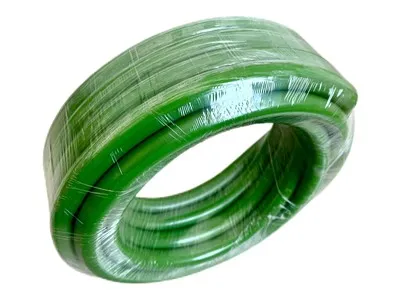
At the end of the day, installing a flat hose is simple if you take the 10 extra minutes to do it right. I’ve supplied hoses to a ton of people who tried to skip steps at first, and now they come back saying their installs go perfect every time. If you’re new to using flat hoses, or if you’re having trouble with a current setup, don’t guess—hit me up to talk through it. Whether you need a new hose, want to ask about different types (we have lightweight for backyard use, heavy-duty for industrial or farm irrigation, even UV-resistant ones for year-round use), or need help troubleshooting your install, I’m here to chat. No sales pitch, no pressure, just honest answers to make your job easier.
Flexible PVC Hose References: Flat Hose Installation and Maintenance Guidelines, Industrial Hose and Fittings Association 2022, Irrigation Equipment Best Practices, National Association of Landscape Professionals 2021.
Weifang Xinzhiyuan Plastic Co., Ltd.
As one of the most experienced flat hose manufacturers and suppliers in China, we offer a wide range of products with superior quality. Please feel free to wholesale premium flat hose made in China here from our factory. We also accept customized orders.
Address: No. 700, Tongle Street, Economic Development Zone, Changle County, Weifang City, Shandong Province
E-mail: hua@xzypvchose.com
WebSite: https://www.pvchose-xzy.com/
