When I first started working in suspension insulator manufacturing over a decade ago, I used to think choosing the right insulator was as simple as picking the biggest, heaviest unit I could find. Back then, I’d show up to client meetings with a workshop demo, rattle off specs like “200 kV” and “120 kN”, and assume that was enough to seal the deal. It didn’t take long before I learned that’s the kind of mistake that gets transmission line operators into trouble. Last year, a client came to us after a cheap insulator they’d installed on a rural line had failed during a summer storm—causing a three-hour outage for 5,000 residents. That incident stuck with me because it wasn’t about bad materials, it was about bad choices. They’d picked an insulator for its low price, not for the conditions their line actually faced. Suspension Insulator

Today, as a suspension insulator supplier, I’ve walked through dozens of these conversations with line designers, utility engineers, and project managers. The process isn’t just about checking boxes on a spec sheet. It’s about matching an insulator’s properties to the unique demands of the line you’re building, retrofitting, or maintaining. Let’s break down what I’ve learned works, step by step.
First, start with the operating environment—this is non-negotiable, and it’s where most people cut corners. I’ve seen insulators fail for reasons that are totally avoidable once you know what to look for. Take contamination, for example. If your line runs along a coast, salt spray is a constant threat. Salt deposits build up on insulator surfaces, and when moisture hits that, it creates a conductive path that can cause flashovers. I remember a project in Florida a few years back where the original engineers specified standard porcelain insulators, not realizing the line was only two miles from the Atlantic. We worked with them to swap to coated composite insulators with hydrophobic surfaces, and that line hasn’t had a flashover in six years. On the flip side, if your line runs through a desert, dust and sand abrasion are the main risks. Porcelain insulators hold up better to abrasion than some older composite materials, but you need to make sure the composite’s sheath is UV-resistant enough to avoid cracking from intense sun over time. Even temperature swings matter. If your line goes from -40°F in winter to 110°F in summer, thermal expansion can cause joints to fail if the insulator isn’t rated for that delta T. I always tell clients: don’t just go by the average temperature of your region. Look at the extremes.
Next, voltage and mechanical load requirements. These are the hard specs, but they’re not as straightforward as they sound. Let’s talk voltage first. Suspension insulators are rated for a specific working voltage, but that’s not just the line’s nominal voltage. You also have to account for temporary overvoltages—things like switching surges or lightning strikes that can spike the voltage temporarily. A 110 kV line, for example, doesn’t just need a 110 kV insulator. It needs an insulator rated for at least 1.5 times that for switching surges, and 2 times for lightning. I’ve seen a few projects where engineers tried to cut costs by using an insulator right at the nominal voltage, and when a lightning strike hit, the insulator flashed over. That leads to outages, and it’s way more expensive to fix than it would have been to get the right rated unit.
Mechanical load is another big one. Suspension insulators have to hold up not just the weight of the conductors, but also wind loads, ice buildup, and even the tension from the line’s sag. The key here is the insulator’s tensile strength, which is measured in kilonewtons (kN). A common mistake here is oversizing or undersizing. Undersizing means you risk the insulator breaking under load—ice alone can add 20 to 30 pounds per conductor in some regions. Oversizing, though, is just wasted money. I had a client last year who specified a 210 kN insulator for a line that only needed 120 kN, and that extra cost added up to $18,000 over the total project. The right approach is to calculate the maximum mechanical load your line will face, then add a 20% safety factor. That buffer covers unexpected events without paying for more strength than you actually need.
Then there’s the choice between porcelain, glass, and composite insulators. This is the conversation I have most with clients, because each material has pros and cons. Porcelain is the traditional workhorse. It’s durable, UV-resistant, and has a long track record—so many older lines use porcelain insulators, and replacing them is straightforward. The downside is that porcelain is heavy, which adds to the load on transmission towers, and it can crack from impact or thermal shock. Glass insulators are similar, but they’re easier to inspect because a broken glass unit is obvious at a glance, whereas a damaged porcelain unit might be hidden. They also self-clean a bit, since rain washes dirt off the smooth surface. But glass is more brittle than porcelain, and it’s not as good in highly contaminated environments.
Composite insulators, which are made of a fiber core and a polymer sheath, have grown a lot in popularity over the last 15 years. Their biggest advantage is weight—they’re 50% lighter than porcelain or glass, which reduces tower load and makes installation faster. They also have superior contamination performance, thanks to that hydrophobic polymer sheath that repels water and contaminants. But they have their own risks. Poorly made composite insulators can suffer from corrosion of the fiber core if water gets past a damaged sheath, especially in coastal or high-humidity areas. That’s why it’s so important to source composite insulators from a supplier that uses high-quality materials and has strict manufacturing controls. I always tell clients to ask for test reports—specifically, the salt spray test results and the core corrosion resistance tests. A good composite insulator will pass 1,000 hours of salt spray testing without issues, and the core will be made of epoxy-fiberglass, not cheaper materials.
Installation and maintenance requirements are another factor people overlook. Some insulators are easier to install than others, which can add up to big savings on labor. Composite insulators are lighter, so two workers can install one easily, whereas a large porcelain unit might need a crane. That’s a huge benefit for remote projects where labor is more expensive. Maintenance is also key. Porcelain and glass insulators can be cleaned manually, but that’s labor-intensive and dangerous—you have to work on live lines. Composite insulators, on the other hand, often have hydrophobic properties that make them self-cleaning, so they need less regular cleaning. But if a composite insulator does get damaged, repairing it is more complex than replacing a broken glass unit. You have to seal the sheath to prevent water intrusion, which requires specialized tools and training.
Another thing to consider is environmental regulations. More and more utilities are shifting to eco-friendly materials, and some regions have restrictions on heavy metals or hazardous waste from insulator manufacturing. Porcelain insulators used to have lead-based glazes, but modern ones are lead-free. Composite insulators are fully recyclable, which is a big plus for projects that want to reduce their carbon footprint. I’ve had several municipal utility clients specifically ask for insulators with low embodied carbon, and we’ve been able to provide composite units that meet those requirements without sacrificing performance.
Wait, let’s circle back to that client I mentioned at the start— the one with the storm outage. After their unit failed, we didn’t just sell them a replacement insulator. We did a full audit of their line, checking for contamination levels, voltage spikes, and even the condition of their transmission towers. We found that not only had they picked the wrong insulator, but their cleaning schedule for existing insulators was every five years, which was too slow for their coastal location. We worked with them to update their insulator specs to coated composite units, and set up a bi-annual cleaning schedule. That line has now run without a single outage related to insulators for four years. That’s the kind of work we do, not just selling parts, but solving problems.
Let’s recap the steps that I always walk through with every client, to make sure they pick the right suspension insulator:
- Map your operating environment: Document contamination (salt, dust, industrial pollution), temperature extremes, and exposure to UV or abrasion. This is the foundation—an insulator that works in the Rockies won’t work in Houston, or Singapore, or the Sahara.
- Calculate electrical and mechanical specs: Don’t just use nominal voltage. Add surge factors for switching and lightning. For mechanical load, use your maximum expected load plus a 20% safety buffer.
- Pick your material based on your needs: If you need low weight and excellent contamination performance, go with high-quality composite. If you need a proven, low-maintenance option for harsh impacts, porcelain. If easy visual inspection is a priority, glass.
- Factor in installation and maintenance costs: Lightweight composite might have a higher upfront cost, but save you on labor and long-term maintenance. Don’t just look at the price tag today—look at total cost of ownership.
- Verify supplier credentials: This is the most important step of all. A cheap insulator from an unknown supplier is almost always a bad deal. Ask for third-party test reports, check their manufacturing standards, and look for references from other utilities. We conduct every test required by international standards—IEC 61109 for composite insulators, IEC 60305 for porcelain, and we follow ISO 9001 for quality control. That’s non-negotiable for us.
I know that for someone who’s not an insulator expert, this can feel overwhelming. There are dozens of specs, hundreds of models, and a lot of conflicting advice online. That’s why I make it a point to sit down with every client, ask the right questions, and walk through all the options with them. It’s not about pushing the most expensive insulator—it’s about getting the one that will work for their line, for years to come. If you’re planning a new transmission line, retrofitting an old one, or dealing with ongoing issues with insulator performance, I’d be happy to walk through your specific needs with you. We work with utilities, EPC contractors, and project managers all over the world, and we’ve got the experience and products to match your requirements.
At the end of the day, a suspension insulator is a small part of a big transmission system, but it’s a critical one. It’s the thing that keeps your line safe, keeps power flowing, and prevents outages that cost businesses and communities millions of dollars. Picking the right one isn’t just a purchase—it’s an investment in reliability. That’s the lesson I learned early on, and it’s the one I pass on to every client who walks through our door.
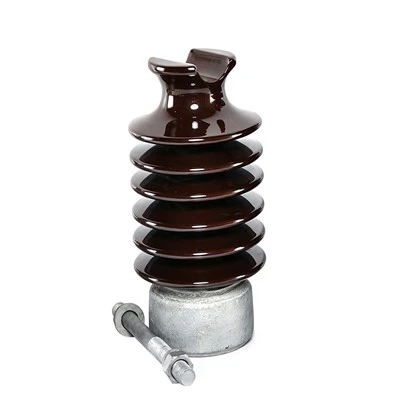
I’ve worked on projects where we upgraded insulators and cut outage rates by 70%, and others where the wrong choice cost a company thousands in repairs. There’s no one-size-fits-all answer, but taking the time to evaluate your needs, ask the right questions, and partner with a supplier you trust will make all the difference. If you’re ready to talk through your next project, reach out to us to discuss your requirements. We’re here to help you choose the right suspension insulator for your line.
Suspension Insulator References
- IEC 60305:2016, Insulators for overhead lines – Cap and pin type porcelain insulators for nominal voltages above 1000 V
- IEC 61109:2020, Insulators for overhead lines – Composite suspension and tension insulators for nominal voltages above 1000 V
- CIGRE Technical Brochure 720, Selection and Application of Suspension Insulators for Polluted Environments, 2018
- IEEE Standard 1222-2018, Standard for Composite Insulators for Overhead Transmission and Distribution Systems Rated Above 1000 V
Pingxiang Star Electric Porcelain & Insulator Co., Ltd.
We are one of the most professional suspension insulator manufacturers and suppliers in China, also support customized service. We warmly welcome you to buy bulk high quality suspension insulator in stock here from our factory. If you have any enquiry about pricelist, please feel free to email us.
Address: Wuli Village, Xiangdong Town, Xiangdong District, Pingxiang City, Jiangxi Province, China
E-mail: star_insulator@sina.com
WebSite: https://www.star-insulators.com/
