If you’re a first-time dump trailer owner (or even a seasoned one who’s never thought too hard about moving your rig), you know this isn’t just hitching up and hitting the gas. As someone who’s been selling dump trailers for years, I’ve seen folks mess this up all the time—bad hitches, overloaded loads, forgetting trailer clearance, even running into legal stuff that’ll leave you with a ticket before you make it to the job site. Let’s break this down step by step, no fancy jargon, just real tips I’ve picked up from customers and my own crew. Dump Trailer
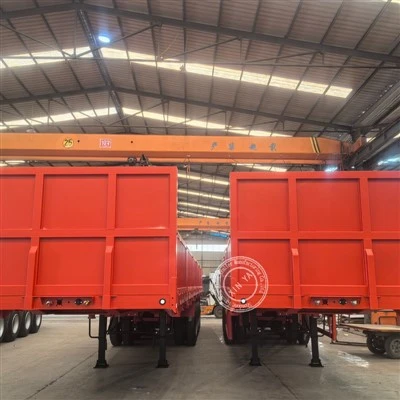
First, let’s start with the basics: what kind of trailer you’ve got, because one size doesn’t fit all. We sell 10- to 16-foot single-axle models for small landscaping jobs, and 20- to 30-foot tandem-axle trailers for construction or hauling heavy dirt/gravel. The key here is matching your tow vehicle’s capacity to the trailer’s gross vehicle weight rating (GVWR). Too many guys show up with a half-ton pickup (that’s what you drive, right?) and hook up a 14,000-lb GVWR dump trailer—they’re asking for engine strain, tire blowouts, or even a total brake fail. Pro move: check your truck’s tow rating in your owner’s manual, not the “max tow” that dealerships brag about— that number usually doesn’t account for passengers, gear, or tongue weight, which is super important for safety.
Speaking of tongue weight, let’s get that right. Tongue weight is the pressure the trailer exerts on your tow vehicle’s hitch, and it should be 10-15% of the trailer’s total loaded weight. If it’s too light, your trailer will sway all over the road—worse, it can fold up or jackknife. If it’s too heavy, your truck’s rear end will sag, mess up your steering, and cause front-end brakes to work way harder than they should. I tell every customer: when the trailer’s empty, adjust the weight until it’s that sweet spot. For example, if your trailer is 7,000 lbs empty, tongue weight should be 700-1,050 lbs. Grab a $20 tongue weight scale from any auto parts store—no guessing, and it takes 2 minutes.
Next, hitching up. Don’t skip this step, even if you’ve done it a hundred times. First, make sure your hitch ball is the right size for your trailer’s coupler. Most dump trailers use 2-inch balls for single-axle, 2 5/16-inch for tandem, but double-check—we had a customer last year who used a 2-inch ball for a 20-foot tandem, and the coupler almost slid off on the highway at 60 mph. Scary stuff. Once the coupler’s locked onto the ball, crank the jack up all the way—no leaving it halfway, it’ll drag on the road and bend or break. Then, safety chains: cross them under the hitch like an X, not just drape them loose. If the hitch comes loose, the chains catch the trailer before it flips into another lane. Make sure they’re tight enough that they don’t drag, but not so tight they pull the trailer off the ball. Last, connect the brake lines and wiring—this is non-negotiable. Dump trailers have electric brakes for a reason; you can’t stop a loaded trailer just with your truck’s brakes. Test the lights before you pull out: brake lights, turn signals, running lights. I’ve seen guys get pulled over for a broken taillight, and that’s the last thing you want when you’re running late to a job.
Now, loading the trailer—this is half the battle, because even a perfect hitch will go wrong if the load is lopsided. Dump trailers are built to haul heavy, but how you distribute that weight matters. Heaviest stuff goes in the bottom, centered from side to side and front to back. If you pile all the dirt on the back, that adds way too much tongue weight, makes the rear end sag, and can cause the trailer to fishtail. If you pile it all on one side, you’ll blow a tire or bend the axle over time. For landscaping loads (mulch, sod, small rocks), distribute evenly, and don’t overload the top of the trailer walls—they’re not made for extra weight above the sides. For heavy construction loads (gravel, concrete, demolition debris), stop 6 inches below the top edge of the walls to avoid spillage. Spilling gravel on the highway is a huge hazard—other cars swerve to miss it, and you’ll get a ticket for hazardous debris. Pro tip: use a tarp, even for things that seem small. Wind can whip debris around, or a pothole can shake something loose. Tarp straps aren’t just for show.
Driving with the dump trailer is different from driving your truck alone. First, slow down. Most folks drive 5-10 mph slower than normal when towing, and that’s a good rule. You need more space to stop—if you usually keep 2 seconds between you and the car ahead, add 2 more seconds for the trailer. Braking takes way longer, especially when loaded, so don’t tailgate. Also, turning: wide turns, way wider than you think. The trailer’s rear wheels follow a different path than your truck’s front wheels. If you turn too sharp, the trailer will clip the curb, a sign, or another car. I tell customers to swing wide into the lane next to you when turning left—for example, if you’re turning left onto a side street, swing into the right lane first, then turn, so the trailer has room. Merging on the highway? Take extra space, don’t rush. Towing adds weight, so merging takes more acceleration. Also, watch for bumps and steep hills—dump trailers are heavier, so steep inclines will strain your engine, and sharp bumps can shift the load. If you hit a big pothole, slow down, it’s easy to damage the trailer’s frame or axles.
Wait, what about if you need to transport the trailer without a tow vehicle? Like, if you’re moving it a short distance around your yard or jobsite, not on public roads. Never do that by hand—dump trailers are heavy, especially when loaded. Use a yard tractor, ATV, or a small utility cart with a hitch rated for the trailer’s weight. If you’re moving it empty around a jobsite, make sure you’re on level ground, and engage the parking brake before hitching anything. Oh, and don’t leave a loaded trailer unattended on a hill—even with the parking brake, it can roll. I’ve seen a customer’s dump trailer roll into a flower bed because he forgot to chock the wheels, and that ruined a $1,500 landscaping job. Chock the wheels every time you park, even on flat ground—just to be safe.
Also, legal stuff: every state has different rules for trailer size, weight, and lighting when towing. For example, in most states, trailers over 10 feet long need side marker lights, and anything over 3,000 lbs GVWR needs brakes. Check your state’s DMV website before you hit the highway—getting a ticket for illegal trailer setup can cost way more than fixing a small mistake. We always remind our customers about this when they pick up a trailer, but it’s easy to forget when you’re in a hurry.

If you’re still unsure about how to transport your dump trailer safely, don’t wing it. This isn’t a time to guess—bad transport leads to accidents, damaged equipment, and even injuries. We’ve helped tons of customers work through their specific setup: if you have a 12-foot single-axle, or a 25-foot tandem, we can walk you through hitching, loading, and legal stuff specific to your needs. No sales pitch, just real advice from guys who deal with dump trailers every single day. If you’re in the market for a new dump trailer too, we’ve got models for every job, from small yard work to big construction. Reach out to us to talk through your needs, no pressure, just honest answers.
Dump Semi-trailer References
- National Highway Traffic Safety Administration. (2022). Towing Safety Guidelines for Medium-Duty and Heavy-Duty Trailers. U.S. Department of Transportation.
- Trailer Life Magazine. (2021). How to Properly Hitch and Balance a Dump Trailer. Active Interest Media.
- Occupational Safety and Health Administration. (2020). Jobsite Safety Guidelines for Heavy Equipment and Trailer Transport. U.S. Department of Labor.
- American National Standards Institute. (2019). Standard for Towing Equipment and Trailer Safety. ANSI.
Shandong Yuncheng Xinya Trailer Manufacturing Co., Ltd.
Shandong Yuncheng Xinya Trailer Manufacturing Co., Ltd. is one of the most experienced dump trailer manufacturers and suppliers in China, featured by quality products and good service. Please rest assured to buy CE approved dump trailer from our factory. Contact us for customized service and OEM service.
Address: No. 008, Hexie Road, Yangzhuangji Town, Yuncheng County, Heze City, Shandong Province
E-mail: fiona@xinyatrailer.com
WebSite: https://www.china-truckfactory.com/
