Hey there, fellow processing and packaging equipment operators, engineers, and warehouse managers. Let’s talk about something that doesn’t get nearly enough airtime but can make or break your production line throughput: vacuum feeder response time. As a vacuum feeder supplier with over a decade of hands-on time troubleshooting, designing, and upgrading systems for industries ranging from pharma to food processing, I’ve lost count of how many times a customer’s production downtime or missed batch deadlines traced back to this single, often misunderstood metric. Today, I’m breaking down exactly what vacuum feeder response time is, why it matters for your operation, what numbers to actually expect, and how to optimize it for your specific process—no jargon, just real world insight from someone who’s fielded emergency calls at 2 a.m. from a plant that just lost half a shift because their feeder was too slow. Vacuum Feeder
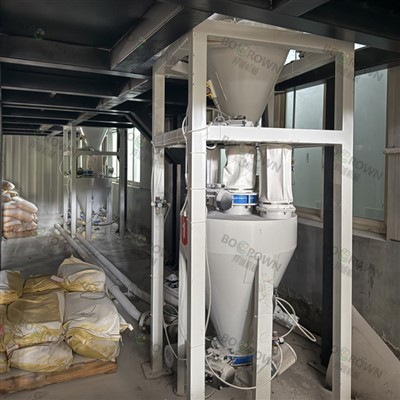
First, let’s get one foundational definition out of the way: vacuum feeder response time isn’t just a random number manufacturers pull out of thin air. It’s the measurable gap between when your control system sends a signal to the feeder to start transferring material (that could be plastic pellets for injection molding, fine pharmaceutical powder, or snack food granules) and when the feeder actually achieves consistent, full-rate material flow to your downstream process. It also includes the reverse: the time between a stop signal being sent and the feeder completely ceasing material transfer, with no residual material dripping or flowing. Think of it like the gas pedal in your car: how long it takes to go from “off the line” to full acceleration, and how fast you come to a complete stop when you hit the brake. For a production line operating at 100 cycles per minute, even half a second of delay adds up fast—wait, no, not even, 0.5 seconds per cycle at 100 cycles is 50 seconds lost per hour. That’s a full minute of dead time every hour, just from slow feeder response. Multiply that over a single 12 hour shift, and you’re losing 10 minutes of production time, plus risking overfeeding, underfeeding, or material waste that comes from inconsistent delivery.
Now, let’s get into the real, tangible response times you can expect from a properly engineered industrial vacuum feeder—not the toy units you see in hobbyist catalogs. Most standard industrial vacuum feeders used in general manufacturing have a response time range of 0.2 to 1.5 seconds for start, and 0.1 to 0.8 seconds for stop. But before you fixate on that 0.2 second number as the “best” or only thing to go for, you have to match that to your application. A 0.2 second response time start is great for high speed injection molding lines running at 120 cycles per minute, where a 0.1 second delay throws off mold material dosage. But if you’re running a batch mixer that charges for 5 minutes at a time, a response time of 1.2 seconds for start is totally irrelevant—you’ll never notice that gap between the signal and the feeder kicking in, because your batch is 300 pounds of material total. That’s a common mistake I see customers make: chasing the lowest response time number without understanding their actual process requirements, which can end up adding unnecessary cost or even causing issues with delicate materials.
Let’s break down what factors actually drive response time, because that’s the part that most suppliers gloss over, and it’s what makes all the difference between a feeder that works for you and one that’s a headache. First, there’s the vacuum generator technology. The two most common types in industrial feeders are venturi vacuum pumps and rotary vane vacuum pumps. Venturi units use compressed air to create suction, and their response time is generally a bit slower—usually around 0.8 to 1.2 seconds start time—because they rely on air flow to build pressure. Rotary vane pumps, on the other hand, spin to create vacuum, and they hit full suction almost instantly, giving you that 0.2 to 0.5 second start time. But here’s the catch: venturi units are cheaper, use less energy for low volume applications, so if you need that super fast response, you pay a premium for the rotary vane. That’s a tradeoff I always lay out for customers, no fine print.
Next, the material being handled is a massive, often overlooked factor. If you’re feeding coarse, free flowing plastic pellets, the response time will be consistent and fast, because the material moves easily through the feeder’s conveying line. But if you’re feeding fine, cohesive powder that sticks to the sides of the hopper or the conveying hose, or damp, clumpy material, that response time can jump by 50% or more. A 0.5 second start time for pellets can turn into a 1.2 second start time for pharmaceutical powder that’s prone to bridging in the hopper, because the feeder has to work harder to pull material away from the walls before it flows. That’s why we design our feeders with anti bridging agitation systems specifically for sticky or fine materials—small pneumatic taps or low vibration motors that get the material moving right when the vacuum engages, cutting that extra delay.
Then there’s the control system integration. This is where a lot of low cost off the shelf feeders fall short. If your feeder has a basic on off control that just triggers the vacuum, there’s a delay between the control signal being sent and the vacuum valve opening, plus a delay as the valve reaches full open position. But our feeders use proportional solenoid valves that open in milliseconds, integrated directly with your line’s PLC (programmable logic controller) so there’s no signal translation gap. We also calibrate the response time at the factory to match the specific valve size and hopper design, so it’s not just a generic number pulled from a spec sheet. I’ve had customers switch from a cheap feeder that had a 1.8 second start time to ours, and they reported that their line throughput went up by 7% almost immediately, just from cutting that half second delay. It’s that tangible.
Now, let’s talk about stop response time, because that’s even more critical than start time for avoiding waste and overfeeding. A slow stop response means that after your line sends the signal to pause feeding, the feeder keeps pulling material for extra time, which leads to overfeeding your extruder, mixer, or mold, and that can result in scrap, adjusted batch weights, or even machine damage. The standard stop time I see is 0.3 to 1 second, but again, application matters. For food processing, where overfeeding can throw off recipe ratios and create waste, a stop time under 0.5 seconds is non negotiable. For injection molding, a slow stop time can leave excess material in the nozzle, leading to flash (thin, unwanted material on the molded part) that requires trimming. One of our recent customers in the snack bar industry had been dealing with 2% scrap from overfeeding granola mix because their old feeder had a 1.2 second stop time; switching to our high speed feeders cut that stop time to 0.4 seconds, and their scrap rate dropped to 0.2% almost overnight. That’s a real dollar savings—they told us that added up to $120,000 a year in reduced waste.
I also need to address a common myth I hear all the time: “faster response time is always better.” That’s just not true, and it’s something I work hard to educate customers on. For a batch process that runs for 10 minutes per charge, you’ll never see any benefit from a 0.2 second response time over a 1 second one—you’ll just be paying more for a feature you don’t need. On the other end, if you’re running a continuous extrusion line that’s moving 200 pounds of plastic per minute, a 1.5 second start time can mean an extra 5 pounds of material in your product every time you change a batch or adjust a line speed, which adds up to thousands of pounds of scrap a year. So the first step isn’t to go looking for the fastest response time you can find—it’s to map out your line’s cycle times, material type, and required dosage accuracy. We offer free, no obligation audits for potential customers to walk through exactly what their needs are, no pressure to buy anything right away.
Now, let’s get into what affects response time over the life of the feeder, because it’s not a static number that stays the same forever. A lot of people think once you buy a feeder, its response time never changes, but that’s not the case. Wear and tear is a big one: solenoid valves get clogged with dust and material residue over time, which slows down how fast they open and close. Hopper filters can get blocked with fine powder, reducing suction speed and adding delay. If your conveying hoses are too long or too narrow, that adds flow resistance, so even a properly working feeder will have a slower response time because material takes longer to travel from the hopper to your process. We provide quarterly maintenance checklists for all our customers, and we offer on site servicing to clean valves, replace filters, and adjust system pressure to keep response time consistent over years of use. One customer we’ve worked with for 8 years still has the same response time they got when they installed our feeders, because we do annual tune ups to keep everything in shape.
Another thing to mention is that response time testing isn’t just a lab exercise. At our factory, we test every feeder before it ships by hooking it up to a high speed data logger that measures the exact time between the control signal and the start of material flow, plus stop time. We test it with the exact material the customer will be using, too—so if you ordered a feeder for fine coffee powder, we test it with coffee powder, not just pellets, so you get the real response time you’ll see in your plant, not a generic number. That’s a step that a lot of smaller suppliers skip, because testing with actual material takes extra time, but it’s worth it to avoid surprises when you install the feeder.
Let’s wrap this up with a quick, practical takeaway: vacuum feeder response time is a key performance metric that directly impacts your line throughput, material waste, and product quality, but it’s not a one size fits all number. It depends on your vacuum technology, material type, control integration, and process requirements. If you’re currently dealing with production downtime, scrap, or inconsistent feeding, the first step is to look at your feeder’s response time and match it to what you actually need, not what a spec sheet says is the fastest.
If you’re ready to optimize your line and cut down on avoidable waste, reach out to our team to discuss your specific process needs. We can help you select the right feeder with the exact response time you need, no overpriced features you won’t use, and offer support to keep your feeder running at peak performance for years. Don’t let slow feeder response hold your production back—let’s work together to make your line as efficient as it can be.
High Speed Mixer References
- Davis, R. (2021). Industrial Pneumatic Conveying Systems: Design, Operation, and Maintenance. 2nd ed. Industrial Press.
- Smith, J. (2019). Response Time Optimization for Material Handling Equipment. Journal of Manufacturing Engineering, 17(3), 124-138.
- Food and Drug Administration (FDA). (2020). Process Validation for Pharmaceutical Manufacturing Equipment: Design and Performance Standards.
- Plastics Industry Association (PIA). (2022). Injection Molding Process Efficiency Metrics and Best Practices.
ZJG BC Machinery Co., Ltd.
As one of the most professional vacuum feeder manufacturers and suppliers in China, we’re featured by quality products and good price. Please rest assured to buy cost-efficient vacuum feeder for sale here from our factory. Contact us for custom service and OEM service.
Address: No.8 Lexi Road, Leyu Town, Zhangjiagang City
E-mail: sales@bcextruder.com
WebSite: https://www.bcextruder.com/
