If you’ve ever watched a professional tattoo artist glide a portable tattoo machine across skin with steady, controlled precision—creating clean lines, soft shading, and vibrant color without wasting a single stroke—you might’ve wondered: how do they turn a small, lightweight device that fits in the palm of their hand into a tool that creates art people carry for life. As a tattoo machine supplier who’s spent the last 12 years designing, testing, and refining portable models for artists across 30 countries, I get asked this question at least once a week. New artists, hobbyists testing their first custom setup, even seasoned pros looking to add a mobile kit to their rotation all reach out asking for the same straight answer: not just how to use a portable tattoo machine, but how to use it well—safely, consistently, and in a way that honors both the skin you’re working on and the craft that’s been in your hands. Tattoo Machine
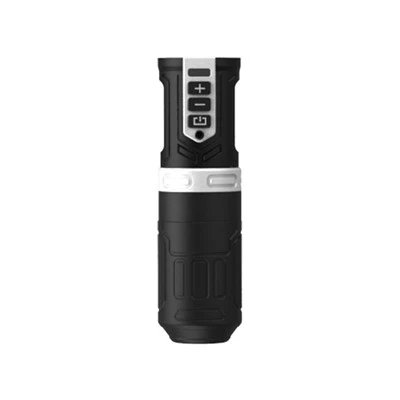
First, let’s get one thing straight: portable tattoo machines aren’t “beginner toys” or watered-down versions of heavy, traditional coil machines. They’re engineered for portability—lighter to reduce hand fatigue during long sessions, designed to work seamlessly with wireless power supplies, and built to navigate tight areas like neck curves, behind the ear, or the space between fingers where bulkier machines can’t fit. But that portability comes with small, specific details that can trip up new users if you skip the prep work. Before you even turn the machine on, there are three non-negotiable steps that separate a smooth session from one that ends in uneven ink blowouts or discomfort for your client.
Start with the machine itself. When you unbox a portable tattoo machine for the first time, the first thing you should do is inspect the contact screw and needle bar. Unlike coil machines, which have a larger, more exposed needle assembly, most portable rotary machines (the most common type for mobile work) use a fine, precision needle bar that can shift if it’s not tightened to the exact tension. I always recommend artists use a small torque screwdriver to tighten the contact screw—twist it until it’s just snug, not so tight that you have to force the needle to move. Then, test the needle stroke. Most portable machines have adjustable stroke lengths, usually between 2.0mm and 4.0mm, depending on the task. For linework, stick to a 2.5mm to 3.0mm stroke—short enough to create crisp, clean lines without digging too deep into the dermis. For shading or packing color, bump it up to 3.5mm to 4.0mm; that longer stroke helps deposit ink evenly, which reduces the chance of patchy color later.
Next, prep your station like you would for any professional tattoo, but make room for the portable machine’s small profile. A lot of new portable machine users rush this step, setting their wireless power supply on a wobbly tray or skipping to wipe down the machine mid-session to save time. Don’t do that. Portable machines are compact, so dust, ink, or excess lotion can get into gaps between the body and needle assembly if you’re not careful, leading to jitters or inconsistent power. Set your power supply on a flat, stable surface—many artists use a portable rolling cart that fits in a hotel room booth or a client’s living room, since wireless models don’t need to be tethered to an outlet. Then, check the needle grip. Most portable machines use a standard grip size, but make sure it’s locked in tight. A loose grip means you’ll have to grip the machine harder to control it, leading to hand cramping after just an hour. And for the love of clean work, always use a disposable membrane between the needle bar and the grip. That small, cheap piece of plastic keeps ink from seeping into the machine’s internals, which means you won’t have to deep-clean your portable machine after every session—saving you time and extending its lifespan.
Once your machine is prepped, it’s time to connect it to the power supply. This is where a lot of first-time users make the mistake of cranking the voltage too high out of excitement. Portable tattoo machines run on much lower voltage than coil machines, usually between 6.0V and 9.0V for most linework, and 7.5V to 10.0V for shading. The exact voltage depends on your machine model and needle size—smaller 3RL needles work better at lower voltage, while larger 5RS or 7F needles need a bit more to deposit ink evenly. The rule I teach every artist who buys a machine from me is: start at 6.0V, then slowly increase it until the needle moves smoothly through the skin without dragging. If you see any ink blowback onto the machine or the client’s skin, you’ve gone too high, or the stroke is too long. Stop, lower the voltage by 0.5V, and test again.
Now, the part that makes portable machines both a joy and a challenge: controlling the motion. Because they’re lighter than coil machines, you might be tempted to press harder into the skin to stabilize yourself. Resist that urge. The machine’s weight should do most of the work. Hold the machine like you would a pen, with a light, relaxed grip—not a death grip that makes your hand shake. The needle should enter the skin at a 45-degree angle, not straight down or at too steep an angle. For linework, move the machine in slow, consistent strokes, overlapping each line by about half the needle’s width to avoid gaps. For shading, use slightly longer, lighter strokes, letting the needle glide across the skin to build gradient without digging in. What I love most about portable machines is that they let you reach areas that coil machines make almost impossible—like a wrist tattoo that curves sharply, or a behind-the-neck piece that forces you to lean in at an awkward angle. The light weight takes the pressure off your wrist, so you can hold that steady line for 20 minutes without cramping.
But here’s the thing that no one tells you about portable tattoo machines: the best technique in the world won’t save you if you don’t clean and maintain your machine properly after every use. Unlike coil machines, which can take a bit more abuse, portable machines have delicate internal parts—small gears, precision bearings, and a motor that can be damaged if ink or sanitizer gets into the wrong spots. After every session, disassemble the needle assembly (needle, grip, and membrane) and soak them in a medical-grade ultrasonic cleaner for 10 minutes. For the machine body itself, use a lint-free cloth dipped in isopropyl alcohol to wipe down the exterior, being careful not to get alcohol inside the ventilation holes or around the motor. Never submerge the entire machine in water or sanitizer—that’s a fast track to a broken motor. Once it’s dry, lubricate the needle bar with a tiny drop of sewing machine oil. Don’t overdo it—just enough to keep the bar moving smoothly, no excess. I always tell artists to do a quick function test after cleaning: attach a test needle, set the voltage to 6.0V, and make sure the needle moves evenly without any rattling or sticking. If you catch a small issue early, you can fix it before it turns into a problem mid-session.
Over the years, I’ve seen artists use portable machines for every kind of tattoo you can imagine—small, delicate finger tattoos that take 15 minutes to finish, full-sleeve pieces where they switch between a portable liner and shader to get tight lines and soft shading, even cover-ups where the portable machine lets them work around scar tissue without putting extra pressure on the skin. But I’ve also seen artists skip steps that lead to avoidable mistakes: a needle stroke that’s too long, a grip that’s loose, a voltage that’s too high, all adding up to a tattoo that doesn’t hold ink the way it should. The portable tattoo machine isn’t a shortcut—it’s a tool that rewards care and attention to detail.
If you’re new to using a portable tattoo machine, start small. Practice on fake skin first, or a friend’s hand (with their permission, and proper sterilization, of course). Get used to the weight, the stroke, how the voltage responds when you adjust it. Once you’re comfortable, try small, simple designs before moving to larger, more complex pieces. And if you run into a problem—your machine is jittering, ink is seeping into the body, the needle is dragging—reach out. As a supplier, I don’t just sell machines; I offer support. A lot of artists don’t realize that portable machines have tiny, easy-to-adjust parts that can fix most issues, from a loose needle bar to a slightly misaligned stroke. We walk them through it over the phone or email, because when an artist has a tool they trust, it shows in their work.
Whether you’re a freelance artist who does pop-up tattoo events, a studio owner looking to add mobile service to your offerings, or a hobbyist who wants to experiment without the bulk of a traditional coil machine, a portable tattoo machine can be a game-changer. But it only works if you use it right. That means taking the time to prep the machine, adjust the settings to match your work, control your grip and pressure, and maintain it after every session. It’s not about being perfect—it’s about being consistent, and respecting the craft that every tattoo you make represents.

If you’re ready to upgrade to a portable machine that’s built for reliability, light weight, and consistent performance, or if you have questions about finding the right model for your style, get in touch. We work with artists of all levels, from beginners just starting out to seasoned pros looking to expand their setup, and we’re here to help you find the tool that works for you.
Tattoo Machine Components References
- Tattoo Machine Design and Function: Rotary vs. Coil Systems, Journal of Professional Tattoo Arts, 2021
- Infection Control and Maintenance for Portable Tattoo Equipment, OSHA Tattoo Industry Safety Guidelines, 2022
- Ergonomics of Portable Tattoo Machines for Long Session Fatigue, International Journal of Tattoo and Body Art, 2023
- Needle Stroke and Voltage Calibration for Consistent Tattoo Results, Tattoo Artists Association Technical Manual, 2020
Zhuji Taituo Machinery Technology Co., Ltd.
Zhuji Taituo Machinery Technology Co., Ltd. is one of the best tattoo machine manufacturers and suppliers in China for over 20 years, also supports customized service. Welcome to buy advanced tattoo machine made in China here and get quotation from our factory. For price consultation, contact us.
Address: 101, Building 12, Youdi, No. 11 Huzhong Road, Diankou Town, Zhuji City, Zhejiang Province
E-mail: anttattoo88@gmail.com
WebSite: https://www.antinktattoo.com/
