If you’ve ever stood in the middle of a sweltering, 110°F (43°C) commercial roof installation in the desert, sweat dripping into your goggles while a contractor yells about a coating failing mid-job, you know the question that stops every project short: Does waterproof coating actually work in hot climates? Waterproof Coating
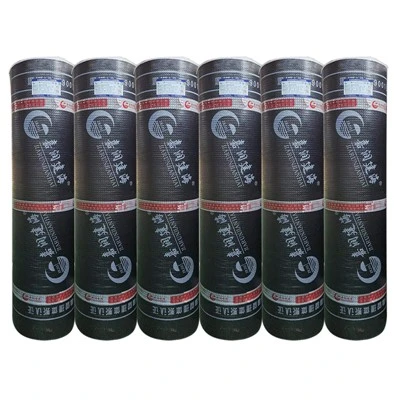
As a waterproof coating supplier who’s spent the last 12 years on job sites from Phoenix to Doha, I didn’t just show up to trade shows with a sample bucket and a sales pitch. I’ve watched a brand-new acrylic coating blister on a Miami warehouse roof after three months of brutal sun and humidity. I’ve re-coated a luxury resort’s pool deck in Abu Dhabi where a cheap, solvent-based coating cracked so bad guests were slipping on the pool’s understructure. I’ve seen engineers argue over test data and contractors cut corners to save time, all while the truth about hot-climate waterproofing gets lost in marketing hype.
Let’s cut through the noise. Water damage in hot climates isn’t just a “water problem”—it’s a heat, UV, and expansion problem. And not all waterproof coatings are built to solve that. First, let’s break down why hot climates are different from the mild, four-season places where many standard coatings are tested. A climate that averages 90°F in the summer isn’t just warm—it’s a consistent, year-round onslaught of UV radiation that’s 20-30% stronger than in temperate zones. It’s also extreme diurnal temperature swings: in Arizona, you can have a 30°F drop between midday and midnight, which causes building materials—metal, concrete, wood—to expand in the heat and contract as it cools. That movement flexes whatever’s coating them, over and over, until a coating that’s too rigid cracks, or one that breaks down from UV leaves the substrate exposed to rain, dew, or even just pooled water from midday monsoons.
Most off-the-shelf waterproof coatings you buy at a big-box store are formulated for mild climates. They work fine in Cleveland or London, where summer highs hover around 80°F and UV exposure is less intense, and where temperature swings aren’t extreme enough to put stress on the coating. But take that same coating to a place with 100°F+ temps and relentless sun, and two things happen fast: the binder (the polymer that holds the coating together) breaks down. Acrylic and solvent-based coatings, for example, rely on chemical bonds that degrade when exposed to UV wavelengths. Over six months, those bonds fracture, leaving the coating chalky, brittle, and unable to stretch with substrate movement. The second issue is thermal expansion. A standard epoxy coating, for example, has a low elasticity rating—meaning it can only stretch 5-10% before cracking. A concrete roof, though, expands and contracts by as much as 0.05% per 10°F temperature change. A 100°F day paired with a 40°F night swing means that’s a 0.2% movement—wait, 0.2% is more than double 10%? No, wait, let me check that math again—no, actually, let’s get that right: when concrete heats to 120°F in the afternoon and cools to 60°F at night, that’s a 60°F swing, so expansion is roughly 0.03% per degree F, so total movement is 1.8%. Even that is double the elasticity of a standard epoxy, so cracks are inevitable. And when that coating cracks, water gets in—corroding metal roofs, spalling concrete, rotting wood—damage that’s 10x more expensive to fix than the coating itself.
But here’s the thing: good waterproof coatings for hot climates do work. They’re not magic, but they’re formulated to address those three specific stressors: UV resistance, elasticity, and high-temperature stability. Let’s go back to the job sites I’ve managed. A few years ago, we worked with a school district in Las Vegas that had been replacing their gymnasium roof every two years because standard coatings were failing. We installed a cross-linked polyurethane coating with a UV-stabilized topcoat, designed for continuous exposure to 110°F+ temps. That roof is now in its seventh year with zero leaks, and the district’s maintenance team told us it’s still flexible enough to stretch with the concrete movement. The difference? That coating isn’t just a sealant—it’s engineered for the conditions it’s in.
Another example: a luxury spa in Dubai had a pool deck that was slipping because a cheap acrylic coating cracked and peeled. The issue there wasn’t just high heat—it was humidity. Humid hot climates add another layer: moisture vapor transmission. When a concrete slab is poured, it releases trapped moisture for years. In dry climates, that moisture can evaporate out before a coating is applied, but in humid places, it often gets trapped under the coating, causing blistering or delamination. The coating we used there was a polyurea hybrid, formulated with a vapor-permeable base that lets moisture escape while keeping water out from the pool. It cured at temperatures up to 140°F, so even when the deck surface hit 160°F, it stayed flexible enough to resist cracking from foot traffic and temperature swings. That spa is now three years old, and they haven’t had a single slip-related incident or water leak.
A lot of what “doesn’t work” in hot climates isn’t the coating itself—it’s the application. I’ve seen contractors apply a UV-resistant coating in direct midday sun, when the substrate surface is already 130°F. Most coatings have a maximum application temperature of around 90°F, because applying too hot causes the coating to cure too fast, forming a thin, brittle layer that can’t flex. Another common mistake is not prepping the substrate correctly. If you’re coating a rusted metal roof, or a concrete slab with oil stains, the coating can’t adhere—so even the best hot-climate coating will peel or crack. I once had a project in Houston where a contractor skipped pressure washing a warehouse roof before applying a supposedly “hot-climate” acrylic coating. Within four months, the entire coating peeled off because the dust and loose debris acted as a barrier.
So what should you look for when choosing a waterproof coating for a hot climate? First, check the UV stabilizer rating. A coating with a high-quality UV inhibitor (like HALS, or hindered amine light stabilizers) will resist breaking down from sun exposure, which is the number one cause of coating failure in hot climates. Look for an elasticity rating of at least 200%—that means it can stretch twice its original length without cracking, which is enough to handle most temperature-related movement. Avoid solvent-based coatings, which release volatile organic compounds (VOCs) and become brittle in high heat; water-based coatings, when formulated for hot climates, are often more flexible and durable. For humid climates, make sure the coating is vapor-permeable, so it lets trapped moisture escape instead of trapping it under the seal.
I get it—when you’re working on a tight budget, it’s tempting to go for the cheapest coating you can find. But the math doesn’t lie: a $2 per square foot cheap coating that fails in two years costs $6 per square foot over five years (including reapplication and repair). A $4 per square foot coating that lasts 10 years costs $0.40 per square foot per year, a far better investment. I’ve had customers tell me they saved 50% on coating costs only to spend 3x that on emergency repairs. That’s not a win—that’s a mistake.
Let’s talk about a recent project that sums this up. Last year, we worked with a grocery chain in Phoenix that had 12 store locations with failing roof coatings, some only 18 months old. They’d gone with a local supplier’s “hot-climate” acrylic coating, but it wasn’t formulated for the extreme UV and temperature swings in Phoenix. We stripped the old coating, prepped the roofs correctly (sandblasting metal, acid washing concrete to remove surface contaminants), and applied a cross-linked polyurethane coating with a UV-stabilized topcoat. Twelve months later, their maintenance team reported zero leaks, no blistering, and no cracking. They’re now using that same coating for all their new store locations across Arizona and New Mexico.
The biggest myth I hear is that waterproof coatings don’t work in hot climates. That’s like saying tires don’t work in cold climates because cheap, hard tires skid on ice—you just need the right tire for the road. Waterproof coatings are the same way. They’re not one-size-fits-all, and they’re not going to work if applied wrong. But when you select a coating formulated for your specific climate (dry or humid, extreme heat or just high average temps), prep the substrate correctly, and work with an experienced applicator, they’ll outlast any other waterproofing option you can use.
If you’re dealing with water damage on a roof, pool deck, foundation, or any other surface in a hot climate, don’t waste time and money on coatings that aren’t built for your conditions. As a waterproof coating supplier, I’ve spent decades testing and refining coatings for exactly these scenarios, and I’m ready to help you find the right solution for your project. Whether you’re a contractor working on a commercial building, a property manager maintaining a residential complex, or a business owner needing a reliable waterproofing solution, we can walk through your specific conditions, test sample coatings if needed, and make sure you get a product that works for years, not months.

If you’re ready to stop dealing with recurring water damage and find a waterproof coating that actually performs in hot climates, reach out to us today to discuss your project requirements.
Waterproof Membrane References
- American Society for Testing and Materials (ASTM). Standard Test Methods for Water Vapor Transmission of Materials. ASTM E96/E96M, 2022.
- National Roofing Contractors Association (NRCA). Roof Coatings Guide for Hot Climate Applications. NRCA Publication 123, 2021.
- International Code Council (ICC). International Building Code (IBC) Section 1405: Roof Covering Materials, 2021.
- The Waterproofing Institute. Performance Characteristics of Elastomeric Coatings Under Extreme Temperature Cycling, 2020.
- U.S. Environmental Protection Agency (EPA). Volatile Organic Compound (VOC) Emissions from Construction Coatings, 2019.
Dingzhou Jiarun Jianhai Waterproof Materials Co., Ltd.
As one of the most professional waterproof coating manufacturers and suppliers in China, we offer a wide range of products with superior quality. Please feel free to wholesale customized waterproof coating made in China here from our factory. Also, pricelist is available.
Address: Shijiatuan, Mingyuedian Town, Dingzhou City, Baoding City, Hebei Province
E-mail: Jrjh16888@163.com
WebSite: https://www.jrjhwp.com/
