If you’ve ever walked into a BMX shop, stared at a wall of frames, and thought, “Wait—these look almost the same, but one’s for cruising the bowl and the other’s for hitting the track? How do I tell them apart?” you’re not alone. As someone who’s spent the last decade working directly with riders, testing frames, and shipping hundreds of custom builds to shops and riders across the globe, I get this question all the time. A lot of folks assume BMX frames are just BMX frames—small, steel, and built for tricks—but the truth is, freestyle and race BMX frames are designed for completely different stresses, environments, and riding styles. Skimp on the right frame, and you’ll be buying a new one by the end of the season. Roll with the one made for your type of riding, and it’ll feel like an extension of your bike, no matter how big the trick or how tight the race lap. Bmx Frame
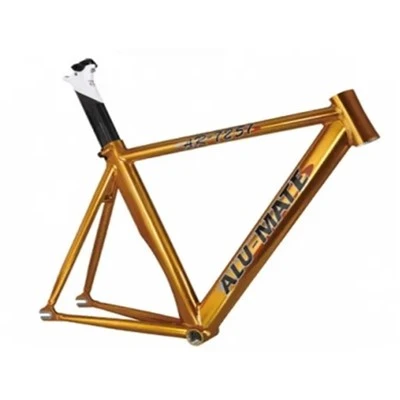
Let’s start with the core purpose of each, because that’s where every other difference stems from. Race BMX is an Olympic sport, right? It’s high-speed, timed laps on a closed track packed with jumps, banked turns, and a straight finish that’s all about going as fast as you can. Freestyle BMX is all about creative tricks—whether that’s grinding a rail in a skate park, spinning a 360 off a ramp, or hanging out in a dirt jump competition. Those two activities put wildly different forces on the frame, so the engineering decisions that go into each could not be more distinct.
First up: geometry. This is the part new riders (and even some old heads) mess up the most. Race BMX frames are built for speed and predictability, so their geometry is tight and focused on forward momentum. Think about it: when you’re racing, you want to lean forward to cut through the wind, shift your weight smoothly to navigate turns, and keep the bike stable at 30+ mph. Race frames have a shorter top tube—this is the horizontal tube that connects the seat post to the handlebar stem—compared to freestyle frames. Why? A shorter top tube lets you tuck your hips forward over the bottom bracket (the part where the pedals attach) to get a more aerodynamic position. They also have a steeper head tube angle. The head tube is where the front fork attaches, so a steeper angle means the front wheel turns more directly, less like a loose beach cruiser. That’s perfect for racing because it lets you make quick, precise steering adjustments mid-jump or around a bank without the bike wandering.
Freestyle frames? Geometry is all about trickability and stability in the air. If you’re spinning a bike, grinding, or landing a trick, you need room to shift your weight, not be crunched into an aerodynamic tuck. Freestyle frames have a longer top tube—this gives you more space to move your body around when you’re in the air, whether you’re doing a bar spin or a tailwhip. They also have a slacker head tube angle, which sounds counterintuitive until you ride it. A slacker angle means the front end is a bit longer and the steering is less twitchy. That’s great for freestyle because when you land a trick from 10 feet in the air, you don’t want the front wheel to bounce or turn unexpectedly. It lets you stay balanced through the landing and move into your next trick without fighting the bike. I’ve seen riders pick up race frames for street riding and instantly feel unstable on rail grinds, and vice versa—race frames feel too cramped when you’re trying to land a 360 on a dirt jump. It’s not that one is “better”; it’s that they’re built for different moves.
Next, material and wall thickness. This is where the engineering gets real. Race BMX frames need to be lightweight enough to sprint, but tough enough to handle repeated hard landings at high speed. Most race frames are made from chromoly steel, the same high-strength alloy used in aircraft parts, but their wall thickness is thinner than freestyle frames. Let me explain: a typical race frame’s main tubes (top, down, and seat tubes) might have a wall thickness of 2mm or less. Why thin? Less metal means less weight, which translates to faster acceleration—critical when you’re fighting for a spot at the start line. But thin metal is rigid, not flexible. When you land a race jump at 25 mph, that rigidity transfers the impact straight to the rider, which is what you want for speed. If the frame flexed too much, you’d lose power pushing into the pedals and struggle to stay aligned on the track.
Freestyle frames, on the other hand, are built to take abuse. We’re talking about slamming into rails, landing sideways off ramps, and repeating tricks hundreds of times a week. So freestyle frames use heavier wall thicknesses—usually 2.5mm to 3mm for main tubes—and many are reinforced in high-stress areas: the head tube, the bottom bracket shell, and the rear dropouts (where the wheel axle attaches). For example, a freestyle frame might have extra gussets—metal plates that connect tubes—to prevent the head tube from snapping if you land a front wheel heavy. I’ve had a customer send me a bent race frame after a dirt jump accident that would have totally crushed a freestyle frame, but guess what? A year later, that same rider used a freestyle frame and bent the rear dropout after 6 months of street riding. That’s not a flaw—it’s exactly what the frame is supposed to do. Race frames flex a little when they take impact, but freestyle frames are built to hold up to repeated, blunt force.
Then there’s the wheelbase and standover height. Wheelbase is the distance between the front axle and the rear axle, and it makes a world of difference. Race frames have a shorter wheelbase—usually around 40 inches for adult models. A shorter wheelbase means the bike turns faster, which is perfect for navigating tight race turns and weaving through the pack at the start of a race. It also makes the bike easier to lift and maneuver when you’re jumping multiple times in a lap. Freestyle frames have a longer wheelbase, around 42 inches or more. The longer distance between the axles keeps the bike more stable in the air. When you’re spinning a tailwhip or doing a 360, a longer wheelbase means less chance of the bike tipping forward or back unexpectedly. It also feels more planted when you land grind after grind on a rail, instead of bouncing around.
Standover height is the distance between the top of the top tube and the ground when the bike is upright. For race frames, standover is low. When you’re racing, you want to be able to easily clip in or out of pedals and shift your weight quickly over the frame. A low standover also keeps the center of gravity low, which adds to stability at high speeds. Freestyle frames have a higher standover. Why? Because when you’re doing tricks like bunny hops or manual (wheelie), you need space to lift your feet over the frame. A higher top tube gives you room to move your legs without hitting the frame mid-trick, which is non-negotiable for street and park riding.
Wait, what about seat stays and chain stays? I almost forgot those small but critical parts. The chain stays are the tubes that connect the bottom bracket to the rear axle. Race frames have shorter chain stays. Shorter chain stays mean the rear wheel is closer to the pedals, which lets you accelerate faster and makes the bike more responsive when you’re sprinting off the start line. Freestyle frames have longer chain stays to add stability. Longer chain stays prevent the rear wheel from lifting too easily when you’re doing wheelies or big tricks, and they help keep the bike balanced when you land a jump at an angle. Seat stays, the tubes that connect the top of the seat tube to the rear axle, are also different. Race seat stays are stiff and minimal, designed to transfer pedaling power straight to the rear wheel. Freestyle seat stays are a bit more flexible to absorb small impacts from rough landings, so the frame doesn’t jolt when you land a trick.
I should also mention that there are some exceptions these days, right? Some riders mix and match parts, and there’s a growing segment of “vert” freestyle that borrows a little from race geometry, but that’s the exception, not the rule. Back in the early 2000s, a lot of riders tried to race on street frames and vice versa, and they ended up with broken parts or bad race times. I’ve seen it firsthand when I was testing frames for small teams back in 2012. A local race team tried to switch all their riders to freestyle frames for a season, and half the team crashed mid-lap because the front end was too slack and they couldn’t make tight turns. The next season, they went back to race frames, and their lap times dropped by two seconds—huge for a race track.
Another thing to consider is the type of riding you do most. If you’re a rider who competes in BMX races on the local track, or just loves ripping laps and hitting big jumps as fast as you can, a race frame is going to serve you way better. You’ll be lighter, more responsive, and faster. If you’re into street, park, dirt jumping, or just messing around doing tricks at the skate park, a freestyle frame is the way to go—it’s built to handle the rough landings and grind work.

At the end of the day, the biggest mistake riders make is picking a frame based on looks alone, not what they’re going to do on it. A lot of race frames look sleek and thin, and freestyle frames look bulkier, but that’s not a design flaw—that’s engineering for what matters most. As a BMX frame supplier, we don’t just sell parts—we help riders find the right tool for their passion. If you’re tired of buying frames that don’t hold up to your riding, or you’re not getting the speed you want on the track, hit us up to talk through what you need. Whether you’re a kid just starting out, a competitive racer, or a street rider pulling tricks every weekend, we can help you pick a frame that’s built for your style. Don’t waste another season on a frame that was made for someone else’s riding—get the right one for you.
Bike Frame References:
- BMX Frames: Geometry, Materials, and Design for Discipline, ProAction BMX, 2021
- Olympic BMX Racing Frame Specifications, Union Cycliste Internationale, 2022
- Freestyle BMX Frame Engineering for Impact Resistance, American Bicycle Association, 2020
- BMX Frame Weight vs. Durability Tradeoffs, BMX Magazine, 2019
- Wheelbase and Steering Dynamics in BMX Frames, Journal of Cycling Science, 2021
ALU-MATE Metal Industrial Co., Ltd.
As one of the most professional bmx frame manufacturers and suppliers in Taiwan, we have world-leading production equipment and strong manufacturing capabilities. We warmly welcome you to wholesale advanced bmx frame from our factory. Contact us for customized service and OEM service.
Address: NO.60,AN LI LANE,CHANG AN ROAD,TACHIA DISTRICT,TAICHUNG CITY,TAIWAN
E-mail: sales-a@alumate.com.tw
WebSite: https://www.alu-mate.com/
